A book by Bronson Ko

Teach with calm authority. Transform every student.

Most instructor training either demands obedience or chases constant praise. Neither one holds. The MENTOR Method is the six stage framework Bronson Ko built across twenty five years on the floor, and it is the reason his students push themselves when nobody is watching.

A teaching standard for owners and the instructors who carry their floor.

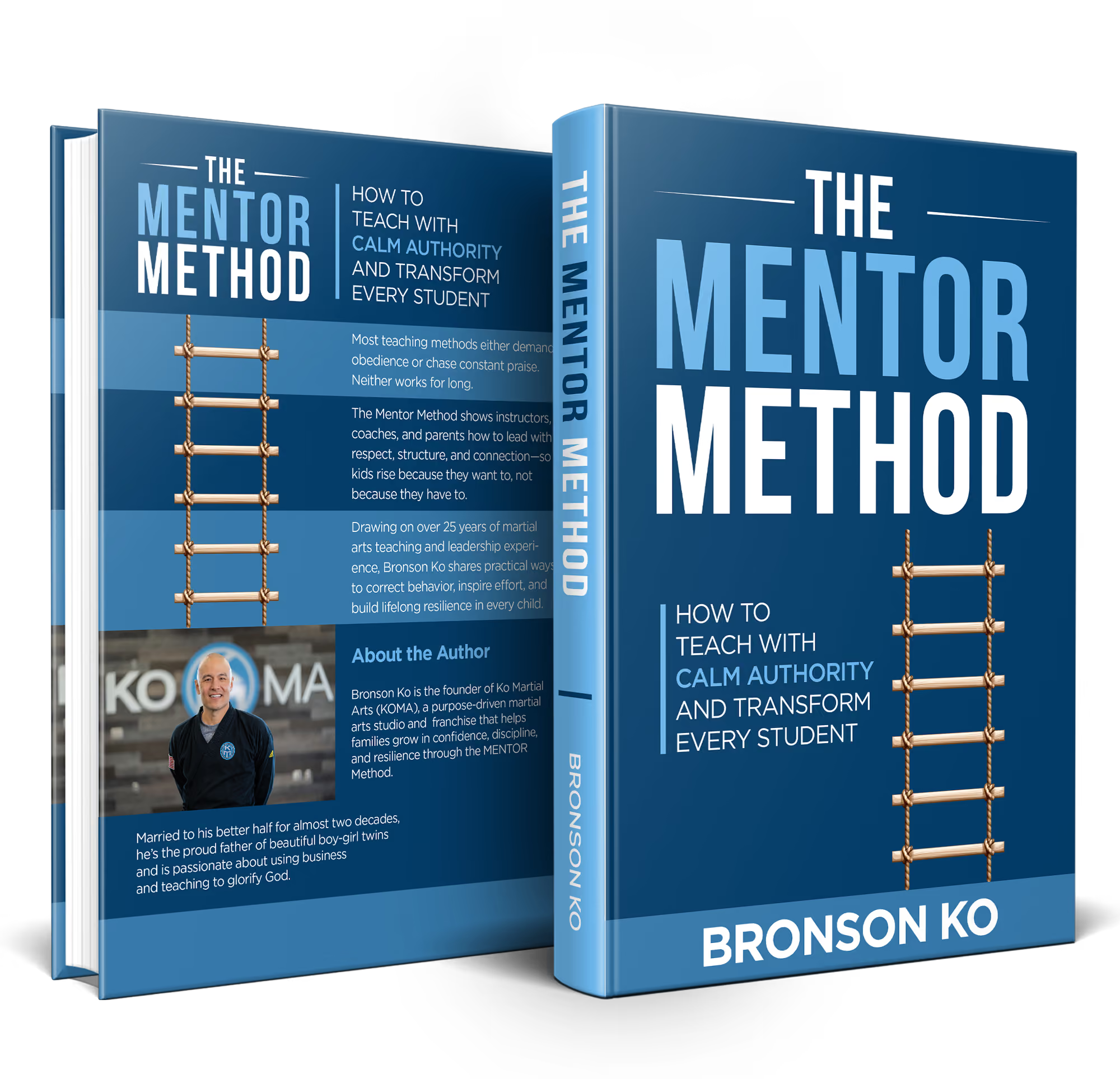
The MENTOR Method by Bronson Ko, hardcover
25

Years teaching

06

Stages of the method

04

C's of earning respect

Three methods, one choice

Every instructor on your floor is already using one of these.

The question is not whether your team has a method. It is whether they chose it on purpose. Watch for three things in each one: what drives effort, what happens when you are not there, and what kind of student it produces over time.

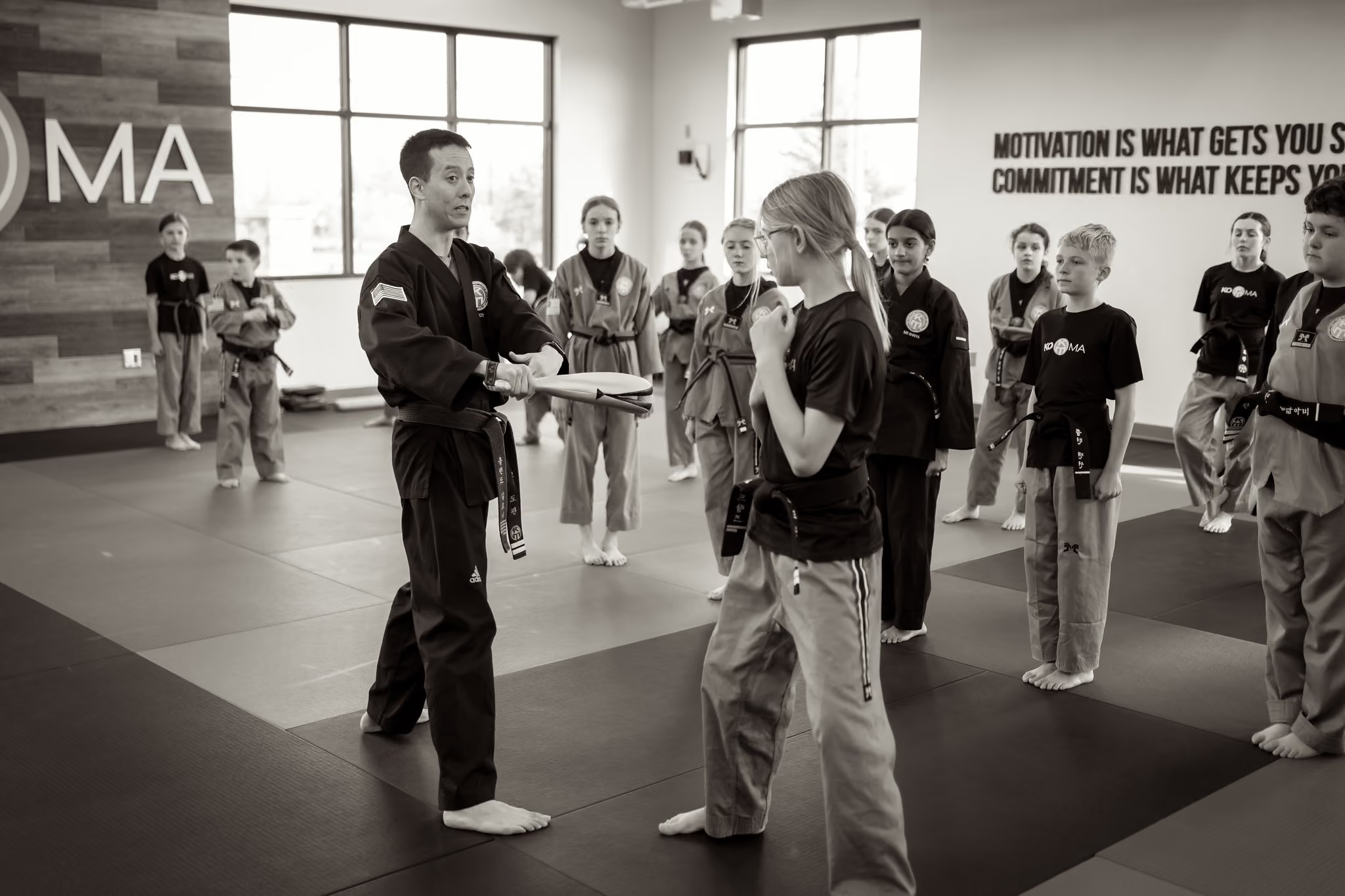
A martial arts class in session at Ko Martial Arts
Method one

The Authoritative

Do what I say or face the consequence. It builds sharp technique and mental toughness, and it produced a generation of strong instructors. Effort comes from fear, it stops the moment you look away, and what you are left with is a compliant student.

Method two

The Tippy Toe

Keep it fun, keep it light, never let anyone get upset. The instructor turns into a performer and behavior quietly earns entertainment. Effort comes from wanting to be liked, the energy has to keep climbing to work, and what you are left with is a comfortable student.

Method three

The MENTOR Method

Guide the student to choose the right action for themselves. Connection and accountability in the same breath, without fear and without a show. Effort comes from respect and ownership, it holds when nobody is watching, and what you are left with is a committed student.

The framework

Six stages. In order. Every time.

Each stage builds on the one before it, like rungs on a ladder. Skip one and the wall weakens. Follow the sequence and you create structure, consistency, and momentum your students can feel.

M

Measure

Find the student's true starting point before you teach anything. Start where they are, not where your lesson plan wants them to be. This is how you close the tension gap.

E

Establish

Make the connection, then set one clear expectation built from a prompt and a response. Realistic beats ambitious. Success at the first step buys you the second.

N

Notice

Catch progress the instant it happens and say it out loud. Small counts. Speed matters. This is where the Eagle Eye separates a good instructor from a great one.

T

Test

Step back and see if they can hold the expectation with less help. Save the praise for bigger steps. Let them strain, because the struggle is what makes it stick.

O

Observe

Remove every cue, including your face, and let them own the outcome. Allow the failure if it comes. Real confidence only arrives when the win was fully theirs.

R

Remind

A raised eyebrow. A short question. Skills fade for everyone, so this stage never ends. Think of yourself as the Chief Reminding Officer, for as many reps as it takes.

What the book covers

A shared language for everyone on your floor.

The framework is only as strong as the person using it. The book walks an instructor through the whole system, from how they carry themselves before class starts to how they correct a student in front of a watching parent.

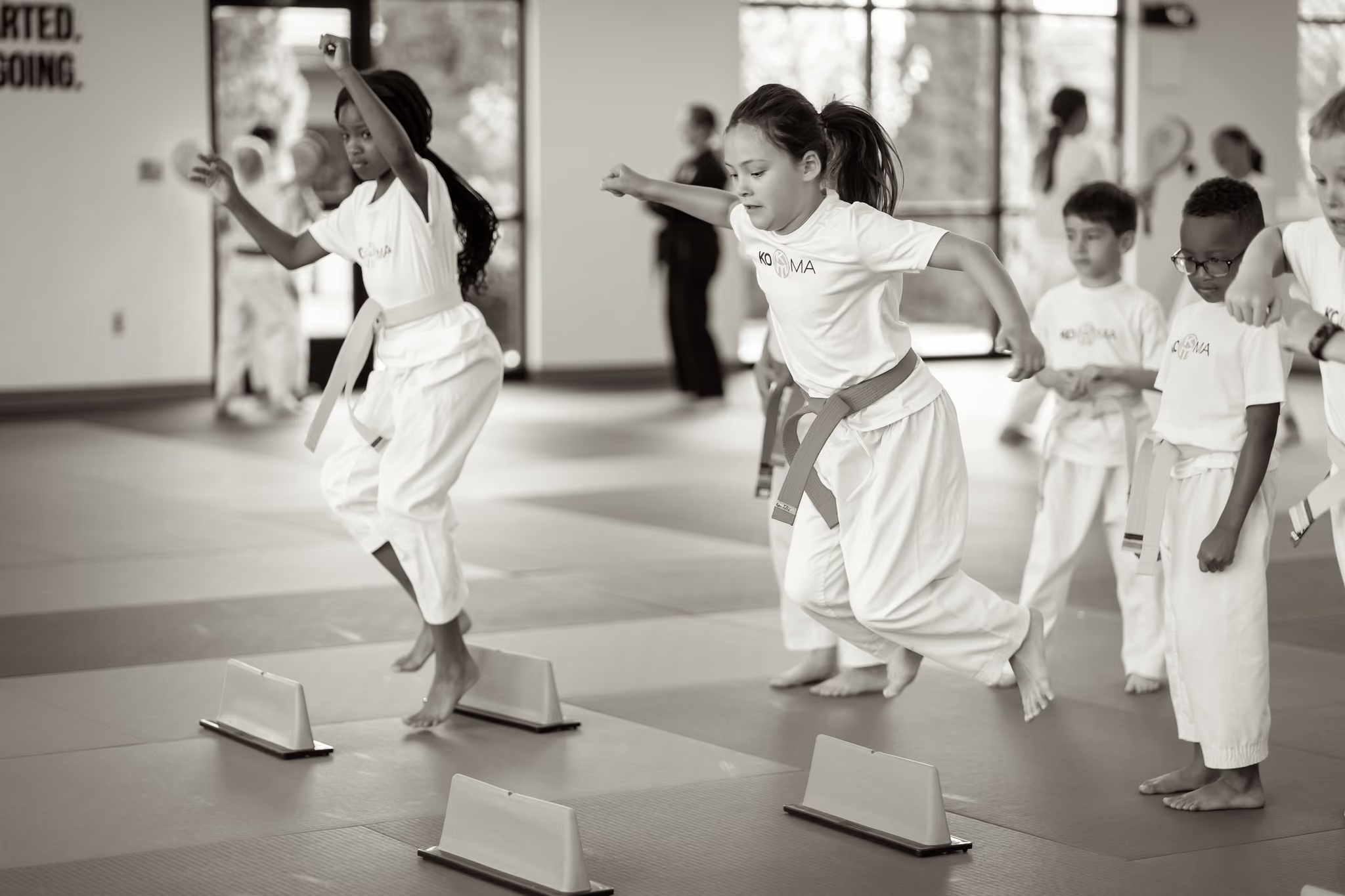
Students training on the mat at Ko Martial Arts

Presence

Calm, confident, and committed. Why the loudest instructor in the building is rarely the one being followed.

The Four C's of Respect

Confrontation, consistency, competence, and character. How authority is actually earned, in that order.

The Instructor Triangle

Connect, catch, and coach. Three legs of the stool, and what happens to a class when one of them is short.

Voice as a Tool

Volume, tone, pitch, pace, clarity, and melody. Plus how to protect a voice that has to teach six classes a night.

Engagement Without Entertainment

What actually sparks effort at each age, and why an entertaining class is not the same as a great one.

Communication Tools

Clear directions, filler words to cut, the counting voice, and the scripts for correcting behavior in the moment.

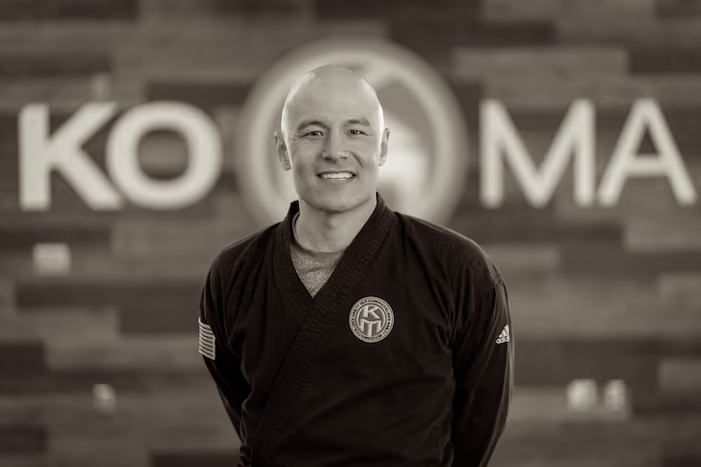
Bronson Ko
About the author
This method is not a theory I teach at the studio. It is how we communicate, connect, and help our own son grow.
Bronson Ko

Bronson Ko is the founder of Ko Martial Arts, a multi location school in the Kansas City area known for its structure, discipline, and mentorship driven culture. He began training at three years old under his father, a grandmaster from South Korea, and has been teaching for more than twenty five years.

He developed the MENTOR Method through years of trial, error, and thousands of classes, blending biblical principles, traditional martial arts values, and modern developmental insight. He and his wife also use it every day at home with their son, who is autistic and nonverbal, breaking down expectations, celebrating small wins, and building communication one step at a time.

Today he is equipping school owners across the country to build the same culture in their own communities.
The training floor at Ko Martial Arts
Get the book

Put it in your instructors' hands.

The MENTOR Method is on Amazon now. Buy one for yourself, or one for every instructor who steps on your floor, and the whole team is teaching from the same language by the end of the month.

Available in paperback, hardcover, and Kindle.

The method is the teaching. The Standard is the business.

The MENTOR Method gives your floor one way to teach, so a new instructor is ready in weeks instead of seasons and a correction is something parents thank you for. The Academy Standard is where owners build the rest of the experience, from the first phone call to the black belt ceremony, so every family feels it in every class.